

Flower jelly
preserving that summer solstice joy 🌞

Merriest of solstices, friends!
Here, the days have been hot and dry, as expected this time of year. Which doesn’t make it any easier, of course. In late May, with a tiny babe fresh at home, five wildfires burned around our hill within the timeframe of a week and a half. Caring for a baby in addition to our older child seems to bring climate anxiety to a new level.
But I’ve been focusing on the joys of this time of year. Flowers, so many flowers. Stuffed zucchini blooms. The first ripe, sun-warmed garden tomatoes. My best friend traveling to spend a week with us. The gorgeous quilt she made for baby F, hand-sewn and botanically-dyed.
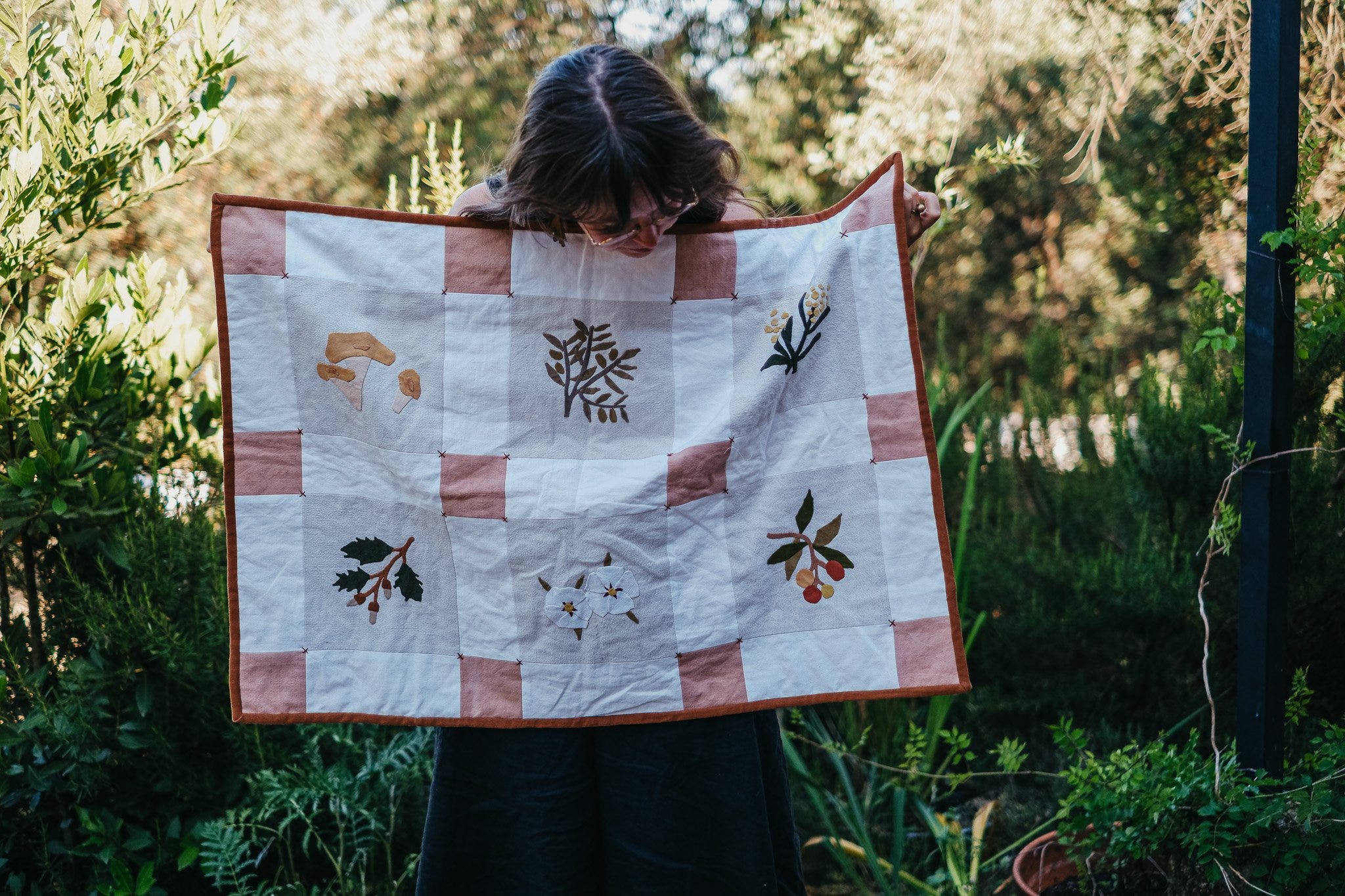
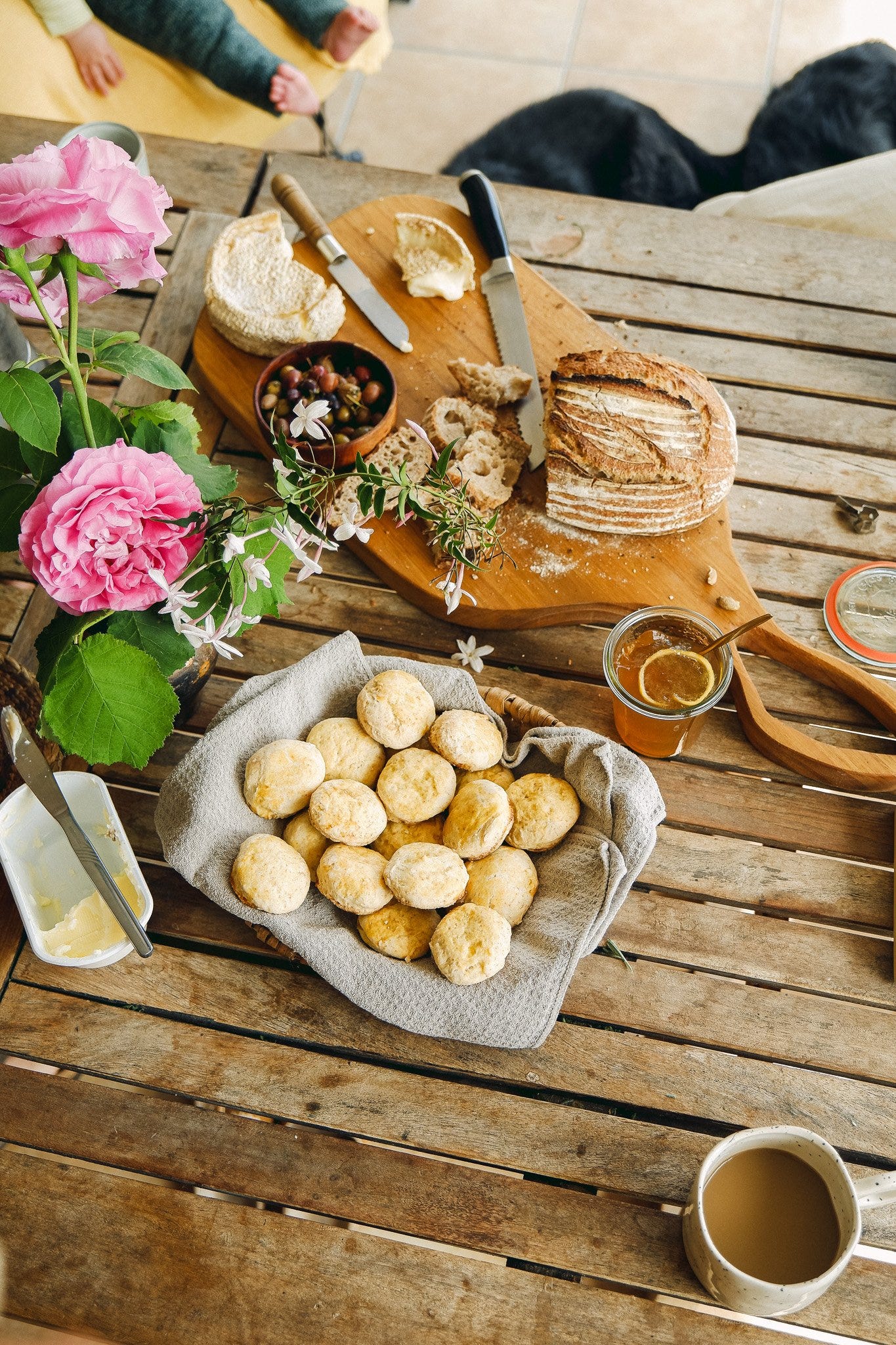
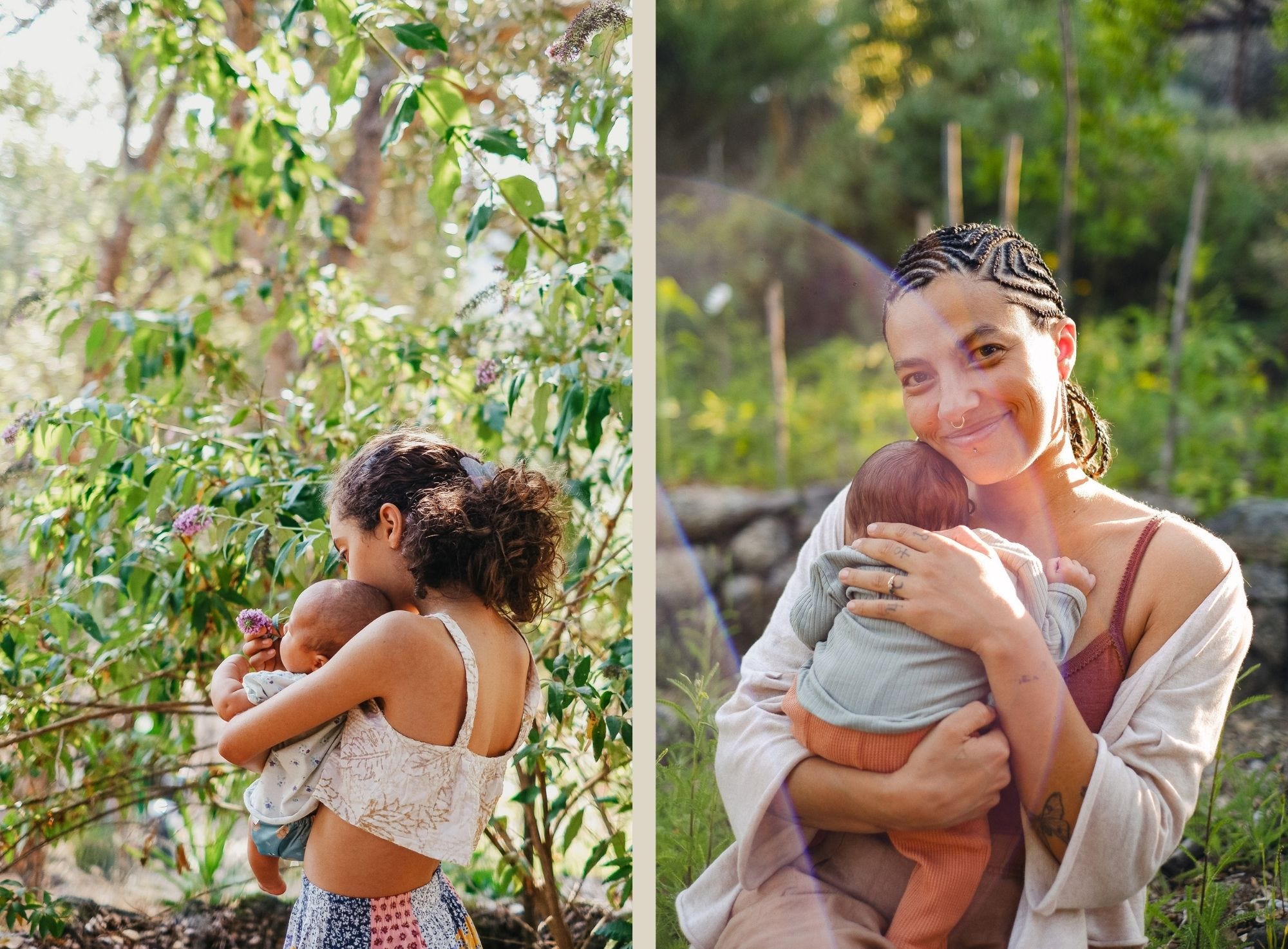
Gatherings with friends and their babies over good food. The radical generosity in my community. A cool temperature inside the house, where we’re spending most of the day. My maternity leave, which I feel so grateful for, offering me a full summer of family time. Seeing my two girls together and the palpable love J has for her little sister.

I might write more about what these early weeks of rediscovering motherhood have been like, but that’s for another day. Today, as the day stretches to its longest, it’s time for a short and sweet sunny recipe share. And what better way to celebrate light and joy than flowers?
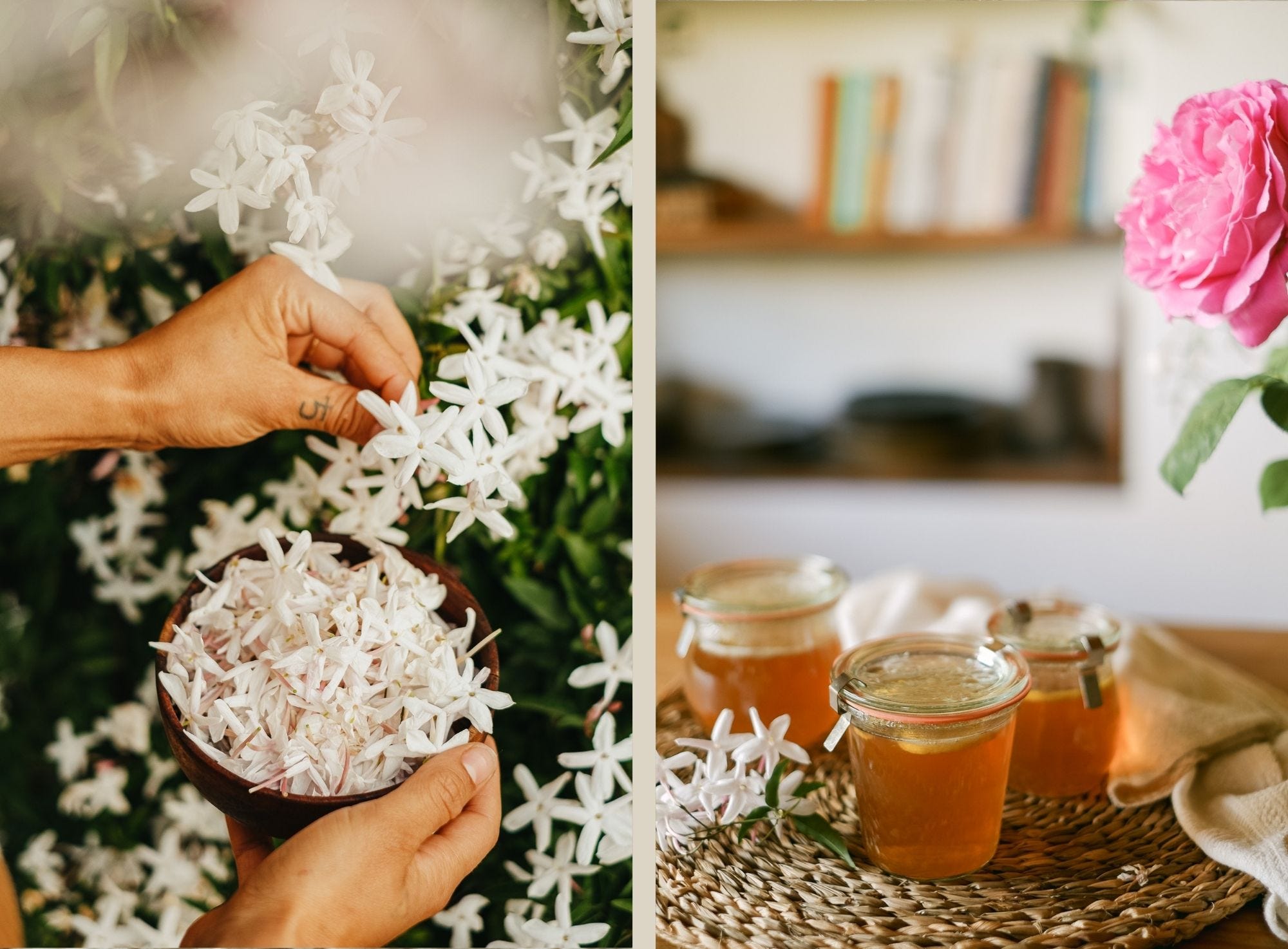
Flower jelly
This has to be my favorite kitchen discovery from this year! It’s very light and fresh, and bursting with flavor. It’s such a wonderful way of working with your favorite fragrant edible flowers. Just make sure to experiment, as some flowers will transfer their aroma better than others. I highly recommend jasmine (Jasminum officinale) and orange (Citrus × sinensis) blossom, and these jars simply disappeared from our shelves… It’s absolutely delicious paired with strong sheep cheese over fresh sourdough bread (as shown above!).
I believe other good flower candidates for jelly would be elderflower (Sambucus nigra), rose (Rosa spp.), or lavender (Lavandula spp.), which I plan on trying as well.
As a reminder, always make sure you’ve properly identified your flowers before using them. If you don’t grow edible flowers yourself, source them from a reputable source or a friend’s garden (and offer them some of your jellies in return!), ensuring they haven’t been sprayed with chemicals.
Note: You can, of course, make your own pectin, but this recipe uses packaged pectin for ease.
ingredients
1 heaping cup fresh, fragrant edible flowers, green stems removed
2 cups (500 ml) water
2 cups (500 g) sugar
4 tbsp lemon juice
1 sachet (25 g) pectin
directions
Bring the water to a boil.
Place the flowers in a saucepan or large bowl and cover with boiling water. Cover and let infuse for 10 minutes.
Strain this flower infusion into a saucepan and measure it. If you don’t have 2 cups (500 ml) of liquid, add more water to reach that amount.
Add lemon juice and sugar and place on the stove on a medium flame, stirring well to dissolve.
Once it starts boiling, add the pectin. Keep it at a rolling boil, stirring constantly, for about 3 minutes (or follow the sachet instructions).
Transfer to sterilized jars, adding a thin strip of lemon peel for decoration if you’d like, and seal (see directions below). You can process them in a boiling-water bath for good measure, but I skipped it as I knew these jars wouldn’t last long in our household.
Quick bottling guide
These are general bottling directions you can refer to when making preserves.
bottling
Sterilise your equipment when the preserve you’re making is almost done: fill a large, deep saucepan with water and bring to the boil. Place your lids and jars inside, upside down (it’s okay if your jars aren’t covered in water, but keep them facing down, as steam sterilises too!). If using a ladle and funnel, sterilize them as well. Leave everything here until you’re ready to start bottling. Tip: tongs will come in handy when it’s time to remove everything from the hot water.
Ladle the piping hot preserve into the hot jars, using a funnel if needed, leaving 1 cm (1/2 in) of headspace, wipe the rims with a clean, dry cloth, and close with the hot lids. Yes, everything needs to be hot at this stage!
boiling-water bath
To finish, process the jars in a boiling-water bath. Fill the large saucepan half full with water and bring to a boil. Place as many finished hot jars as will fit, upwards, in a single layer. They should be covered by 3 to 5 cm (1 1/2 to 2 in) of water.
Process the jars in this boiling bath for 20 minutes, with the lid on.
Remove from the heat and cool the jars to room temperature, either on a rack or towel on the kitchen worktop or inside the water bath itself.
Once cool enough to handle, check the seal. If the jars aren’t sealed, refrigerate and use quickly, or repeat the process with a new lid (or rubber band, depending on the type of jar you’re using). If using screw tops, do not retighten the lids as this may cause accidental seal failures.
Store your jars in a cool, dark place, and refrigerate once open.

I plan on making the lavender version this week during a nap time.
Will you let me know if you try this recipe, and which flowers you use? I would love to hear about it!
With love from the hill,
Cat 🤎
Familia linda tudo de bom! Muito ver te por aqui 💕
Such sweet photos with your new babe - I would love to read more about rediscovering your experience of motherhood a second time around :) Hoping you all stay safe this fire season, and wishing your family Solstice blessings 🌞